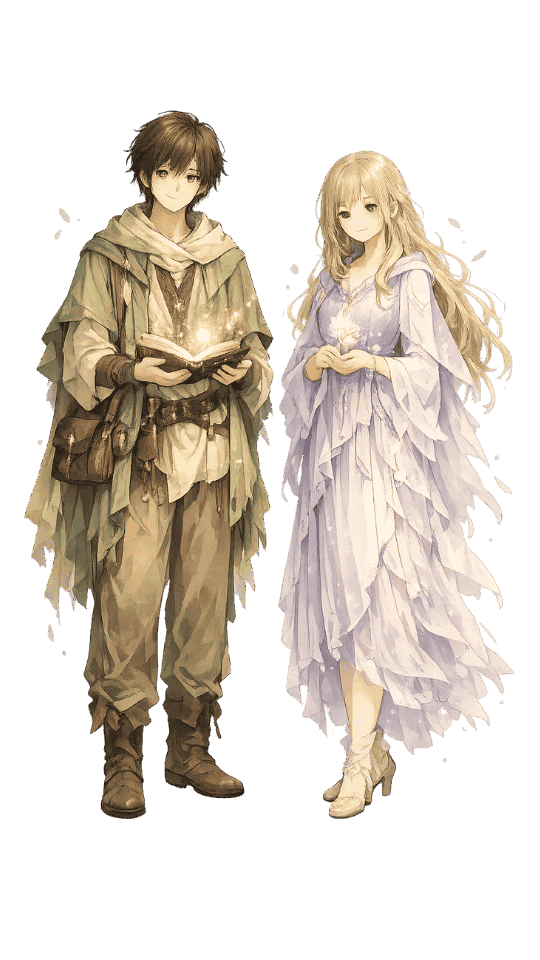
Protagonist
“Help others grow while finding common purpose.”

Introduction
ENFJs are people-focused organizers who notice what a group needs and then rally everyone toward it. They read moods quickly, see potential in others before those people see it themselves, and feel most alive when a shared effort is working. Their main challenge is the flip side: they carry everyone's feelings and forget their own.
A type describes preferences, not limits, so expect to recognize some of this profile and not all of it. If you are unsure ENFJ fits, try the free personality test.
What the four letters mean for an ENFJ
Each letter is a preference on one of the four MBTI scales.
- E: Extraversion. ENFJs draw energy from the world outside their heads, and for this type that world is mostly people. They think out loud, reach out first and recharge through good conversation. They still need quiet after a draining day.
- N: Intuition. They pay attention to patterns and meanings more than raw details. With people, that means noticing where someone is heading, not only what they did today.
- F: Feeling. They make decisions by weighing values and the effect on people. This is a way of deciding, not a sign of being more emotional or less logical.
- J: Judging. They like plans, closure and a clear next step. This is the friend who books the restaurant and the colleague who sends the agenda. It has nothing to do with being judgmental.
For a fuller explanation of each scale, see the four MBTI dimensions explained.
The ENFJ function stack
Type theory describes each type as an ordered set of four mental processes, from the one relied on most to the least developed. The Myers & Briggs Foundation's type dynamics gives ENFJs this order:
- Extraverted Feeling (Fe), dominant: tuning in to the people around them and acting to keep the group connected and moving.
- Introverted Intuition (Ni), auxiliary: a quiet sense of where people and situations are heading.
- Extraverted Sensing (Se), tertiary: awareness of the room, the moment and how things look and feel. The Foundation leaves open whether the tertiary is extraverted or introverted; Se is one common convention.
- Introverted Thinking (Ti), inferior: private, impersonal analysis, the least natural mode and the one that tends to surface under stress.
In the same common convention, INFJs use these four functions with the first two swapped and the last two swapped. That is why the two types get mixed up so often. An ENFJ acts on the group's needs first and checks the hunch second; an INFJ starts with the hunch and shares it later.
ENFJ-A vs ENFJ-T
The A or T at the end of some results comes from 16Personalities' model, not from the official MBTI. It adds a fifth scale, Identity, which 16Personalities describes as how people relate to self-confidence, self-doubt, stress and feedback. The "Protagonist" nickname is theirs too.
- ENFJ-A (Assertive) is described as self-assured and stress-resistant. In practice that can look like shrugging off criticism faster and making an unpopular call without days of second-guessing.
- ENFJ-T (Turbulent) is described as self-conscious, stress-sensitive and eager to improve. That can look like replaying conversations and spotting every flaw in their own performance. The drive is useful, but it costs more energy.
Both share the same core, and neither is better. The guide to Assertive vs Turbulent explains the scale for all types.
How common are ENFJs?
ENFJ is one of the rarer types in US samples. In The Myers-Briggs Company's 2018 US representative sample of 3,578 adults, 2.3% came out as ENFJ, the second-rarest type after ENTJ. It was the rarest type among men (1.4%), compared with 3.1% of women. The 1998 MBTI Manual's US sample put ENFJ at 2.5%.
Both are US estimates from the test's publisher, and the 2018 figures come from an online research panel, so treat them as approximate. ENFJ belongs to the NF group, which 16Personalities calls the Diplomats, along with INFJ, INFP and ENFP.
Read the full profile
Each tab covers one part of ENFJ life in depth.
- How ENFJs think: the four functions in action, what drives and worries ENFJs, and why they are so often misread.
- ENFJ strengths: seven strengths, from reading a room to rallying a group, with examples at work and at home.
- ENFJ weaknesses: blind spots such as overcommitting and delaying hard conversations, and what each one costs.
- ENFJ careers: what ENFJs need from a job, a table of roles that fit, and the workplaces that wear them down.
- ENFJ relationships: ENFJs as partners, friends and parents, why receiving care is harder for them than giving it, and which types they click with.
- ENFJ communication: how they speak, listen and handle conflict, with tips for both sides of the conversation.
- ENFJ learning style: how ENFJs prefer to study and practical strategies for exam season.
- ENFJ work style: ENFJs as teammates and managers, what they need from a boss, and remote vs office.
- ENFJ stress triggers: what overloads ENFJs, how stress shows, coping strategies and when to get support.
- ENFJ growth: six growth areas with a practice for each, plus a simple 30-day plan.
- ENFJ FAQ: answers to common questions, from ENFJ vs INFJ to famous examples.
- ENFJ summary: the whole profile on one screen.
Sources
- Supplement to the MBTI Manual for the Global Step I and Step II Assessments: United States (The Myers-Briggs Company, 2018)
- Myers-Briggs Type Indicator in Canada, Table 10, reproducing the 1998 MBTI Manual US sample (Psychometrics Canada, 2008)
- Type Dynamics: Processes (Myers & Briggs Foundation)
- Our Theory (16Personalities)
Frequently Asked Questions
Everything you need to know about this personality type to help you understand them better.
ENFJ-A / ENFJ-T Protagonist describes a personality type that is usually warm, expressive, supportive, and focused on people. ENFJs often care deeply about connection, personal growth, and helping others feel understood. The "A" and "T" show two different versions of the same type: Assertive and Turbulent.
ENFJ-A types are usually more confident, steady, and quicker to trust their decisions. ENFJ-T types are often more self-reflective, emotionally sensitive, and affected by criticism or pressure. Both types care about people, but they may handle stress and feedback in different ways.
Many ENFJs naturally step into leadership roles because they understand people and know how to encourage cooperation. They often lead by inspiring others, creating harmony, and helping a group move toward a shared goal. However, not every ENFJ wants to be in the spotlight. Some prefer quiet, supportive leadership.
ENFJs are often called Protagonists because they tend to guide, encourage, and uplift others. They may become the person who motivates a team, supports a friend, or helps people see their own potential. The name reflects their active role in relationships, communities, and personal growth.
ENFJs are often social and expressive, but that does not mean they are always outgoing. Some ENFJs may be talkative in familiar settings and quieter in new or emotionally uncomfortable situations. Their people-focused nature is more about connection than constant social activity.
Common ENFJ strengths include empathy, communication, encouragement, emotional awareness, and the ability to bring people together. They often notice what others need and try to respond in a helpful way. This can make them strong friends, partners, mentors, teachers, and leaders.
ENFJs may struggle with overgiving, people-pleasing, taking on too much responsibility, or feeling guilty when they set boundaries. Because they care deeply, they may also carry other people's emotions longer than they should. Their growth often comes from learning to help others without ignoring their own needs.
ENFJs often do well in careers that involve communication, guidance, teamwork, and purpose. Good matches may include teaching, coaching, counseling, human resources, leadership, public service, healthcare support, community work, marketing, training, and people-focused management. The best career for an ENFJ is one that feels meaningful and allows them to make a positive impact.
In relationships, ENFJs are usually caring, attentive, and emotionally invested. They often want their loved ones to feel supported and understood. They may put a lot of effort into communication and connection, but they also need partners who respect their feelings and do not take their support for granted.
ENFJs may feel stressed by conflict, emotional distance, criticism, rejection, lack of appreciation, or environments where people seem disconnected. They can also become stressed when they feel responsible for everyone's happiness. Healthy boundaries and honest communication can help them manage this pressure.
Some ENFJs can become highly aware of how others see them, especially ENFJ-T types. This does not mean they are weak or fake. It often comes from a strong desire to maintain harmony and do the right thing. The challenge is learning to value feedback without letting it control their self-worth.
An ENFJ can set better boundaries by noticing when they feel drained, saying no before resentment builds, and remembering that support does not require self-sacrifice. A helpful rule is to ask, "Am I helping from care, or am I helping because I feel responsible for someone else's emotions?"
Yes. Many ENFJs are emotionally sensitive because they notice tone, mood, tension, and unspoken feelings. This sensitivity can make them compassionate and supportive, but it can also make them feel overwhelmed. Learning when to step back is important for their emotional health.
The best growth advice for an ENFJ is to care deeply without losing themselves. ENFJs grow when they learn to balance empathy with self-respect, leadership with listening, and support for others with care for their own needs. Their kindness becomes stronger when it is honest and sustainable.
No personality type is always positive. ENFJs can be inspiring, warm, and supportive, but they can also become controlling, overextended, or emotionally exhausted when they are not balanced. Personality type should be used as a self-awareness tool, not as a perfect label or final definition of a person.